
Nyungwe Forest National Park Tours
Nyungwe Forest National Park tours in southwestern Rwanda include chimpanzee trekking at USD 250 per person, the forest canopy walk at USD 60 per person, colobus monkey tracking, guided birding, night walks at USD 40 per person, and nature trails across 15 marked routes through one of Africa’s oldest montane rainforests. The park covers 1,015 square kilometres along the Burundi border and is home to 13 primate species, over 300 bird species including 29 Albertine Rift endemics, and approximately 1,000 chimpanzees. Nyungwe is 5 to 6 hours southwest of Kigali by road or 35 minutes from Kamambe airstrip by charter flight, and is most commonly combined with Volcanoes National Park in the north for a complete Rwanda primate itinerary.
USD 250 per person (international non-residents)
Maximum 8 visitors per group, 1-hour encounter
USD 60 per person (international non-residents)
4 daily sessions: 8 AM, 10 AM, 1 PM, 3 PM
USD 100 per person (colobus most common)
Colobus, mangabey, and blue monkey groups available
USD 40 per person
Departs 5:30 PM to 9:00 PM
Mandatory for all visitors; covers standard nature walk trails
Fourth to seventh nights free of charge
5 to 6 hours by road; 35 minutes to Kamambe airstrip by charter
Transfer from Kamambe: approx. USD 450 for up to 3 passengers
Chimpanzee Trekking Tours in Nyungwe Forest National Park
Chimpanzee trekking is the headline activity in Nyungwe Forest and the main reason most visitors travel to this remote southwestern park. Approximately 1,000 chimpanzees live in Nyungwe, making it one of the most densely populated chimpanzee habitats in East Africa, with around 30 individuals in habituated groups that are cleared for tourism at the Uwinka, Gisakura, and Kitabi reception centres. The permit costs USD 250 per person for international visitors and allows one hour with the habituated chimpanzee group once located. Groups of up to eight visitors are permitted per chimpanzee community per session, with morning departures typically from 7:00 AM.
Chimpanzees in Nyungwe are highly mobile, loud, and fast-moving compared to mountain gorillas in Volcanoes National Park. Trackers communicate by radio as the chimps shift through the canopy, and approach can involve rapid movement through dense forest to keep up with the group. The trek duration varies from 30 minutes to 4 hours depending on where the chimpanzees have ranged overnight. The rainy season from October to November tends to concentrate chimps at lower elevations where fruiting trees are most active, making this period productive for viewing despite the muddier trail conditions.
Canopy Walk Tours in Nyungwe Forest National Park
The Nyungwe canopy walk is the only suspended forest walkway in Rwanda, running above the forest floor at approximately 60 to 70 metres height across a series of connected bridges near the Uwinka Visitor Centre. The walkway costs USD 60 per person and operates on four fixed daily sessions at 8:00 AM, 10:00 AM, 1:00 PM, and 3:00 PM from the Uwinka park office. Each session accommodates a limited number of visitors and advance booking is recommended during peak months. The walkway provides an aerial perspective of the ancient forest canopy, with views across the tree crowns that are otherwise inaccessible from ground-level trails.
The canopy walk is open to visitors aged 6 and above, making it one of the few activities in Rwanda’s national park system accessible to children. The physical demand is minimal: the walkway is suspended on cables and steel supports, and the ascent to the walkway level involves a moderate trail hike of approximately 20 minutes from the Uwinka car park. The most productive time to combine the canopy walk with wildlife observation is the early morning session, when primates and birds are most active in the upper canopy. Angola colobus monkeys, grey-cheeked mangabeys, and L’Hoest’s monkeys are commonly spotted from the walkway level.
Colobus and Primate Tracking Tours in Nyungwe Forest
Beyond chimpanzees, Nyungwe National Park offers primate tracking tours for three habituated monkey species: Angola colobus (the most commonly tracked), grey-cheeked mangabey, and blue monkey. Tracking permits cost approximately USD 100 per person for international visitors. Angola colobus monkeys in Nyungwe form some of the largest single-species monkey groups recorded in Africa, with troops of up to 400 individuals reported in the forest’s central zone. These dramatic black-and-white primates move through the canopy in coordinated flows that produce some of the most photogenic wildlife sequences in the park.
Nyungwe’s 13 primate species also include L’Hoest’s monkey, olive baboon, vervet monkey, grey-cheeked mangabey, Dent’s mona monkey, and Rwenzori colobus among others, all present in unhabituated populations that may be encountered on standard nature walks without a specific tracking permit. The overall primate diversity of Nyungwe is higher than any other Rwanda national park and makes the park a destination for primatologists and wildlife researchers from across the continent.
Guided Birding Tours in Nyungwe Forest National Park
Nyungwe Forest National Park is one of Africa’s premier birding destinations, holding over 300 bird species including 29 Albertine Rift endemics found nowhere else on the continent. Key target species for birding tours in Nyungwe include the Grauer’s swamp warbler, Ruwenzori turaco, red-throated alethe, Archer’s ground robin, strange weaver, African green broadbill, and numerous sunbird species that occupy the forest’s altitudinal zones from the valley floors to the ridge tops. Birding is productive year-round in Nyungwe, but the rainy season from October to November brings increased bird activity and more resident species to lower elevations.
Specialist birding guides are available through the park management at Uwinka and through licensed tour operators based in Kigali or Musanze. A guided birding walk in Nyungwe typically runs 3 to 5 hours through the forest trails, covering multiple habitat zones. Day nature walks on the park’s 15 marked trails are included in the standard park entry fee and allow independent exploration with or without a guide, though a guide is mandatory for groups exceeding eight people and for the more remote trail systems.
Night Walk Tours in Nyungwe Forest National Park
Night walks in Nyungwe National Park run from 5:30 PM to 9:00 PM at approximately USD 40 per person and are guided by rangers with torches through designated forest sections near the Uwinka and Gisakura visitor centres. The night walk reveals Nyungwe’s nocturnal diversity: tree pangolins, pottos (slow-moving primates visible by eye-shine), various chameleon species, forest geckos, and owls are among the target species. Nyungwe holds over 85 reptile species and over 30 amphibian species, many of which are only active after dark.
Night walks must be booked in advance through the park office and are offered subject to ranger availability. The minimum group size for a night walk is two people, and the maximum is eight. Visitors should carry a personal torch as a backup and wear insect repellent and full-length clothing. The experience takes place on the established trail system nearest to the visitor centres and does not involve deep forest navigation.
Waterfall and Nature Trail Tours in Nyungwe Forest
Nyungwe’s 15 marked nature trails cover habitats from tea plantation edges to deep forest interior and range from 1-hour loop walks to full-day ridge traverses. The most popular short trail leads to the Isumo Waterfall, a multi-tiered fall accessible in approximately 2 hours round trip from the Gisakura visitor centre and covered under the standard park entry fee. Longer trails including the Bigugu summit trail (6 to 8 hours return, reaching the park’s highest point at 2,950 metres) give access to high-altitude heath and specialist high-elevation bird species that are not found in the lower forest zones.
The Congo Nile Trail passes through sections of the Nyungwe boundary zone and connects to the Lake Kivu shoreline 227 kilometres to the north. Day sections of this trail accessible from Nyungwe offer a different forest-edge experience combining farming communities, tea estates, and the forest interior in a single walk. Day hikes on the Congo Nile Trail sections near Nyungwe do not require a gorilla or primate permit; the standard park entry fee applies for any trail within the park boundary.
Getting to Nyungwe Forest National Park and Where to Stay
Nyungwe National Park is the most remote of Rwanda’s four national parks, located approximately 225 kilometres southwest of Kigali on the road to the Burundi border. The drive takes 5 to 6 hours by private vehicle via the well-maintained southern highway through Butare. A charter flight from Kigali to Kamambe airstrip takes approximately 35 minutes; road transfer from Kamambe to the park takes a further 45 minutes and costs approximately USD 450 for up to three passengers. One&Only Nyungwe House on the adjacent tea plantation is the park’s leading luxury lodge, with nightly rates from USD 1,200 to 2,099 per person. Mid-range options include Nyungwe Top View Hotel and Gisakura Guest House, with rates from USD 80 to 200 per person per night.
What is the best activity to do in Nyungwe Forest National Park?
Chimpanzee trekking is Nyungwe’s most popular single activity, drawing the majority of international visitors. The canopy walk is the best complementary activity and can be done on the same day as a chimp trek in the afternoon session. For birding specialists, Nyungwe’s 29 Albertine Rift endemics make it the single most important birding destination in Rwanda.
How does chimpanzee trekking in Nyungwe compare to gorilla trekking in Volcanoes National Park?
Chimpanzee trekking in Nyungwe costs USD 250 per person versus USD 1,500 for gorilla trekking at Volcanoes National Park. The chimpanzee encounter is more dynamic: chimps are louder, faster-moving, and less predictable than habituated mountain gorillas. Gorilla trekking produces a calmer, more intimate encounter due to the gorillas’ more sedentary behaviour. Both activities are one hour maximum with the primate group.
How many primate species live in Nyungwe Forest?
Nyungwe is home to 13 primate species, making it one of the most primate-diverse forest systems in Africa. These include chimpanzee, Angola colobus, grey-cheeked mangabey, blue monkey, L’Hoest’s monkey, olive baboon, vervet monkey, Dent’s mona monkey, and Rwenzori colobus among others. Only chimpanzees and three monkey species have habituated groups available for permitted tracking.
Is the Nyungwe canopy walk worth it?
Yes for most visitors. The canopy walk at USD 60 per person gives aerial forest views accessible no other way, and the walkway sections above the tree canopy produce strong wildlife photography of monkeys and birds at eye level. The physical demand is low and the session takes approximately 1.5 hours including the approach trail. It is best combined with an early-morning chimpanzee trek on the same day.
What is the best time to visit Nyungwe Forest National Park?
The dry seasons from June to September and December to February offer the best trail conditions and are the most popular periods for chimpanzee trekking. October and November bring heavier rain but tend to concentrate chimps at lower elevations where fruiting trees are most active, making primate sightings more consistent despite muddier trails. Birding is excellent year-round, with the rainy season adding activity from increased insect populations.
Chimpanzee Trekking in Rwanda
Chimpanzee trekking in Rwanda takes place in Nyungwe Forest National Park, in the country’s southwestern highlands, where permits cost $150 per person for foreign non-residents in 2026. Only 24 permits are issued each day across the park’s two habituated chimpanzee communities, so advance booking through the Rwanda Development Board is necessary for most travel dates. Nyungwe Forest is one of Africa’s oldest montane rainforests, covering approximately 1,019 square kilometres, and holds an estimated 500 chimpanzees in total.
Chimpanzees share roughly 98% of human DNA and are the second most popular primate tourism draw in Rwanda after mountain gorillas. Two habituated communities are open to visitors: one group of approximately 60 individuals based in the main Nyungwe Forest, accessible from Uwinka Reception Centre, and a second group of around 30 individuals in Cyamudongo Forest, a smaller relict forest within the park accessible from Gisakura Reception Centre. Foreign residents in Rwanda and the East African Community pay $75 per permit; Rwandan and East African citizens pay $25.
$150 per person per trek. Includes ranger guide and park entrance for the activity. Valid for one habituated group, one hour with the chimpanzees.
$75 per person per trek. Same inclusions as the standard permit.
$25 per person per trek. Same activity and duration.
Not included in all permit tiers. Verify the current park entrance requirement with your tour operator or the Rwanda Development Board before travel.
Chimpanzee Trekking in Nyungwe Forest: The Uwinka Sector
The Uwinka sector of Nyungwe Forest is the main departure point for chimpanzee trekking and the location of the park’s principal visitor centre. Trekkers report to Uwinka Reception Centre in the early morning, typically between 5:00 and 6:00 a.m., for a ranger briefing covering rules of conduct, health requirements, and what to expect during the search. Groups are capped at a maximum of eight visitors per habituated community per session.
The Uwinka-based group can number up to 60 habituated individuals. Chimpanzees move constantly and their location each day depends on food availability and territorial range, which means trek duration varies considerably — from under two hours when chimps are found near the trail network to five or more hours when they have moved deep into the forest. Trekkers should be prepared for challenging terrain including steep slopes, dense undergrowth, and muddy paths.
The Uwinka area also serves as the access point for the park’s famous canopy walkway, a suspended bridge approximately 200 metres long and up to 70 metres above the forest floor. Combining a morning chimpanzee trek with an afternoon canopy walk is a common and well-structured way to spend a full day in the park. The canopy walk costs an additional $40 per person.
Chimpanzee Trekking in Cyamudongo Forest
Cyamudongo Forest is a fragmented patch of rainforest located a short distance from the main Nyungwe block, and it harbours a community of approximately 30 habituated chimpanzees. Trekkers for Cyamudongo check in at Gisakura Reception Centre, where briefings begin before 6:00 a.m. Because the forest patch is smaller and the community more contained, chimpanzees are generally found more quickly in Cyamudongo than in the main forest.
Only eight permits are issued per day for the Cyamudongo community, making this sector among the most competitive to book in advance. Travelers who prioritise a shorter, more predictable trek often prefer Cyamudongo, though sighting success is never guaranteed regardless of which sector is chosen. Gisakura is also the base for colobus monkey tracking, meaning the two activities can be arranged on consecutive mornings without changing accommodation.
What Happens During a Chimpanzee Trekking Session
All trekkers receive a pre-trek briefing covering health regulations, including a requirement that no one with a respiratory illness may participate due to the risk of disease transmission between humans and chimpanzees. Children under 16 years of age are not permitted. Cameras without flash are allowed; flash photography is prohibited throughout the session.
Once rangers locate the chimpanzee community, visitors are allowed exactly one hour in the company of the group. Chimpanzees are active, vocal animals and move quickly through the canopy, which means tracking their behaviour requires constant movement and attention. Vocalisations, including loud calls and drumming on tree trunks, are frequently heard before the group is visually located. During the one-hour visit, chimpanzees commonly feed, groom, rest, and move between trees.
After the hour concludes, rangers lead the group back to the reception centre. Porters are available for hire at the trailhead and are particularly useful on challenging terrain; porter fees are not included in the permit cost and are paid separately, typically in the range of $15 to $20 per porter.
Main primate activity. Departs Uwinka or Gisakura from 5:00 a.m. Duration: 2 to 6 hours depending on chimp location. One hour with the group once found.
A separate permit activity. Two habituated troops available: a supergroup of up to 500 individuals at Uwinka, and a smaller group of about 60 near Gisakura. Permit approximately $60 to $90 per person.
Suspended walkway up to 70 metres above the forest floor. Duration approximately two hours. Permit $40 per person, booked separately from trekking permits.
Multi-species forest walks on Nyungwe’s 130-kilometre trail network. Opportunities to see L’Hoest’s monkeys, red-tailed monkeys, grey-cheeked mangabeys, and over 310 bird species. Lower permit fees than chimpanzee trekking.
Chimpanzee Trekking Rwanda: Booking Permits in Advance
Permits are issued by the Rwanda Development Board and can be booked directly through the RDB website at rdb.rw or via a licensed tour operator. With only 24 permits available per day across all three habituated chimpanzee communities, demand regularly exceeds supply during June to September and December to February. Booking six to twelve months in advance is recommended for those traveling in peak months.
Last-minute permits are sometimes available during the wet season months of March, April, May, October, and November when visitor numbers are lower. However, relying on last-minute availability is a risk, particularly for travelers combining chimpanzee trekking with gorilla trekking in Volcanoes National Park in the same itinerary. Tour operators can manage the booking logistics for both parks, which saves time and reduces coordination errors.
Permits are non-refundable and non-transferable. Passport details are required at the time of booking. Visitors should confirm whether their permit includes park entrance fees or whether a separate entry payment is required on arrival.
Peak dry season. Trails are drier and more manageable. Chimps move toward water sources and may be found in more predictable locations. High demand — permits sell out quickly. Most comfortable trekking conditions.
Second dry window. Slightly fewer visitors than the June to September peak. Good trekking conditions. Also a good period for combining with gorilla trekking in Volcanoes.
Long wet season. Trails become muddy and slippery. Fruit is abundant in the forest, meaning chimpanzees may be located closer to the trails. Permits more readily available. Lower lodge rates.
Short wet season. Similar conditions to March to May. Fewer visitors. Birding is particularly good during this period as migratory species are present.
Getting to Nyungwe Forest National Park from Kigali
Nyungwe Forest National Park is located approximately 225 kilometres southwest of Kigali. By road, the drive takes five to six hours in a 4WD vehicle, passing through the towns of Butare (Huye), Nyanza, and the scenic highland ridgelines that form the Congo-Nile Divide. The route is paved for most of its length but includes winding mountain sections that benefit from an experienced driver, particularly after rainfall.
RwandAir operates scheduled domestic flights between Kigali International Airport and Kamembe Airport near Cyangugu, reducing travel time to approximately one hour. Kamembe is around 50 kilometres from the park’s Gisakura entrance. A number of operators offer road transfers from Kigali with commentary on the landscape en route. Most lodges in and around Nyungwe offer vehicle transfer services from the airport or Kigali.
How long does chimpanzee trekking in Rwanda take?
The total duration of a chimpanzee trekking day depends on how far the habituated group has moved. Once rangers locate the chimps, visitors spend exactly one hour with them. The hiking portion before finding the group can range from one to five hours depending on conditions and the group’s location that morning. Most trekking days conclude by early afternoon.
What is the minimum age for chimpanzee trekking in Rwanda?
The minimum age is 16 years. This rule is strictly enforced to protect both visitors and the chimpanzees from stress and health risks. No upper age limit applies, though the trekking is physically demanding and involves uneven, often muddy forest terrain.
Can I do chimpanzee trekking and gorilla trekking on the same Rwanda trip?
Yes. Many itineraries combine chimpanzee trekking in Nyungwe Forest with gorilla trekking in Volcanoes National Park to the north. The two parks are not adjacent, so the itinerary typically involves a road journey between them, often stopping at Lake Kivu or Kigali in between. A minimum of five to seven days is recommended to cover both parks comfortably.
Is chimpanzee trekking in Rwanda guaranteed?
Sightings are not guaranteed. Rwanda’s habituated chimpanzee communities are genuinely wild animals and can move unpredictably. However, success rates for finding the habituated groups are reported to be high, as rangers track the communities daily. Cyamudongo Forest offers a higher probability of finding chimps quickly due to the smaller forest area.
What should I wear for chimpanzee trekking?
Long-sleeved shirts and long trousers tucked into socks provide protection against biting ants, stinging nettles, and insects in the forest. Sturdy ankle-supporting hiking boots with good grip are necessary, particularly during the wet season when trails become slippery. A lightweight rain jacket or poncho, neutral-coloured clothing in greens, khakis, or browns, and a small daypack with water and snacks are all recommended.
Ziplining in Nyungwe Forest
Ziplining in Nyungwe Forest costs $100 per person for foreign non-residents in 2026, making it the longest zipline in East Africa at 1,850 metres across three sections spanning the rainforest canopy at heights of 20 to 50 metres above the ground. The zipline is operated from Uwinka Reception Centre in Nyungwe Forest National Park, Rwanda’s 1,019-square-kilometre UNESCO World Heritage montane rainforest in the southwest, and runs daily from 9:00 a.m. to 4:00 p.m. with the last group departing at 3:00 p.m. A combined zipline and canopy walkway package costs $125 per person for foreign non-residents, and adding the rope course brings the total to $150.
The Nyungwe zipline opened in 2025 and was constructed across three sections named after the forest’s most prominent inhabitants — the Monkey section, the Chimpanzee section, and the Gorilla section. Each section covers a different part of the valley below the Uwinka ridge, with the course eventually connecting to the park’s existing 200-metre suspended canopy walkway. The minimum age for the zipline is 6 years, with a weight limit that visitors should confirm with the park operator at the time of booking. The activity is operated by trained park staff who provide safety equipment, briefing, and accompaniment through each section of the course.
$100 per person, VAT inclusive. Includes safety equipment, briefing, and guided completion of all three zipline sections. Opens 9:00 a.m. daily; last departure 3:00 p.m. Minimum age 6 years.
$125 per person for foreign non-residents. Includes the three-section zipline plus the 200-metre suspended canopy walkway at 70 metres above the forest floor. Best value combination for first-time Nyungwe visitors.
$150 per person for foreign non-residents. Full adventure package including all three aerial activities. Rope course: $35 per person standalone. Located near Gisakura Park Reception. A full adventure day at Nyungwe.
Foreign residents and Africans outside EAC: $80 per person for zipline only. EAC citizens and Rwandans: RWF 20,000 per person. Rope course: $20 foreign residents, RWF 10,000 EAC. Package rates proportionally reduced.
The Nyungwe Zipline Course: Three Sections Above the Forest
The Nyungwe zipline runs in a sequence of three connected sections from a starting platform above the Uwinka valley to a landing point near the park’s suspended canopy walkway. Each section is named for a primate species in the park: the Monkey section covers the first valley crossing, the Chimpanzee section spans the widest gap, and the Gorilla section is the final run that delivers participants to the canopy walkway connection. The three sections together total 1,850 metres, making the combined course the longest zipline in East Africa as of 2026.
Heights during the crossing range from 20 to 50 metres above the forest floor, varying across the different valley topography along the route. At the highest points, participants travel above the mid-canopy layer of the forest and have aerial views across the tree tops that are not available from ground level. The canopy of Nyungwe’s ancient montane forest extends across the valley floors and ridgelines below, and the density of the tree cover means the forest floor is rarely visible from the highest points on the course. Primates — particularly colobus monkeys — are occasionally visible in the canopy from the zipline platforms.
The zipline course is accessible from Uwinka Reception Centre and takes approximately two hours to complete including briefing, safety equipment fitting, and the time on the three sections. The activity is classified as suitable for all fitness levels and does not require previous adventure sport experience. Participants are harnessed by park staff at each platform and the system is gravity-fed — no physical effort is required beyond launching from each platform. The rope course near Gisakura, which involves balance and agility challenges on tree-mounted platforms, is a separate activity that can be combined on the same day as a drive from Uwinka to Gisakura between activities.
The Nyungwe Canopy Walkway: Before or After the Zipline
The Nyungwe canopy walkway is a 200-metre suspended steel bridge built 70 metres above the forest floor at Uwinka, the highest point of its kind in East Africa and the only structure of this type on the continent. It has been a flagship Nyungwe activity since its opening and predates the 2025 zipline addition. The walkway permits are $40 per person as a standalone, but the combined package with the zipline at $125 is the most popular option for visitors who want to experience both the active aerial crossing and the more sedate walkway perspective in a single visit.
The canopy walkway and zipline serve different photographic and experiential purposes. The walkway provides a slow, stable platform for observing the forest at mid-canopy level, allowing photography of colobus monkeys, turacos, and other canopy species with binoculars and telephoto lenses. The zipline moves quickly from platform to platform, offering brief but high-altitude aerial perspectives that are photographically challenging but visually dramatic. Visitors with photography as a primary objective benefit most from the canopy walkway; visitors seeking a more active physical experience prioritise the zipline. The combined package provides both for $125.
The Nyungwe Rope Course at Gisakura
The Nyungwe rope course is located near Gisakura Park Reception at the park’s southern entrance, approximately 30 kilometres by road from Uwinka. It consists of a series of balance and agility challenges — tightropes, swinging bridges, climbing nets, and platform transfers — mounted in trees and poles above the ground. The rope course is open daily from 9:00 a.m. to 4:00 p.m. and costs $35 per person for foreign non-residents as a standalone activity. The full package including zipline, rope course, and canopy walkway at $150 per person combines the most active aerial activities available in Nyungwe in a single-day itinerary.
Logistically, combining the zipline at Uwinka with the rope course at Gisakura requires a 30-kilometre drive between reception centres on the Trans-Nyungwe highway. Most visitors who plan to do both activities in a single day complete the zipline and canopy walkway at Uwinka in the morning, then drive to Gisakura for the rope course in the afternoon. This timing also works well for visitors who include a colobus monkey tracking session at Gisakura’s 1:00 p.m. or 3:00 p.m. slots, creating a full adventure and primate day with three distinct activities across the park.
Combining the Zipline with Primate Trekking in Nyungwe
The Nyungwe zipline is most often combined with other Nyungwe activities across a two-night stay in the park area. A common two-day structure allocates day one to chimpanzee trekking from Uwinka or Cyamudongo in the morning, with the canopy walkway in the afternoon; and day two to the zipline at Uwinka in the morning followed by the rope course at Gisakura and colobus monkey tracking in the afternoon. This combination covers the park’s key primate activities alongside all three of its aerial adventure experiences within 48 hours without requiring additional nights.
Chimpanzee trekking permits cost $150 per person for foreign non-residents and must be booked in advance through the Rwanda Development Board at rdb.rw, where daily quotas of 24 permits mean early booking is necessary for peak season dates. Zipline permits are booked through the park at Uwinka Reception Centre or in advance through an operator. Combining chimpanzee trekking and the zipline on the same day is possible if the chimpanzee trek concludes by 11:00 a.m. — early enough to make the zipline’s 9:00 a.m. to 4:00 p.m. operating window. However, chimpanzee treks can extend to five or six hours depending on where the community is located that morning, so a same-day combination carries some timing risk.
Dry season. Forest views from the zipline are clearest with drier air and less mist. Trail approaches to the Uwinka platform are drier underfoot. Peak visitor period — book zipline and primate permits well in advance.
Second dry window. Good visibility from the zipline platforms. Comfortable temperatures at Uwinka’s altitude. Fewer visitors than June to September outside the Christmas period.
Wet seasons. The zipline operates in light rain but may be suspended during electrical storms. The forest is at its most atmospheric with low cloud and mist. Fewer visitors and better permit availability for all activities.
Getting to Nyungwe Forest and Planning the Zipline Visit
Nyungwe Forest National Park is approximately 225 kilometres southwest of Kigali by road, a five to six hour drive via Huye. A domestic flight from Kigali to Kamembe Airport with RwandAir reduces travel to approximately one hour in the air and 50 kilometres of road transfer. Uwinka Reception Centre, where the zipline is based, sits approximately 30 kilometres north of the park’s Gisakura entrance on the Trans-Nyungwe highway. Most visitors stay at lodges near Gisakura — including One and Only Nyungwe House, Nyungwe Top View Hotel, and Gisakura Guest House — and drive to Uwinka for morning activities.
Advance booking for the zipline is recommended for peak season dates through the park or a licensed operator. The activity runs daily year-round subject to weather conditions, and walk-up booking on quiet days is sometimes possible at Uwinka Reception Centre. Visitors planning to combine the zipline with the canopy walkway and the rope course on consecutive days should confirm that both reception centres — Uwinka and Gisakura — have the activities available for their specific dates before travel to avoid finding one component sold out on arrival.
What is the weight limit for the Nyungwe zipline?
Specific weight limits for the Nyungwe zipline should be confirmed directly with the park or operator at the time of booking, as these technical specifications can be updated. As with all commercial zipline systems, there is both a minimum and maximum weight limit for safe operation. The park staff conduct equipment fitting at the briefing point and will assess individual participant requirements before departure. Visitors who have concerns about specific physical requirements should contact the Rwanda Development Board or the park operator in advance of travel to confirm current specifications.
Is the zipline suitable for visitors with a fear of heights?
The zipline crosses the valley at heights of 20 to 50 metres above the forest floor. Visitors with a significant fear of heights should be aware that the highest points on the course — up to 50 metres — are well above the comfort range for many people with acrophobia. The activity moves at speed between platforms, which some visitors find reduces the awareness of height during the crossing itself. Park staff are trained to support nervous participants and the launching process can be done at a pace that allows mental preparation. The canopy walkway at 70 metres is technically higher but more static, which some visitors find more manageable than the zipline’s speed component.
How long does the full zipline experience take?
The three-section zipline course takes approximately 90 minutes to two hours including the safety briefing, equipment fitting, and the time on each section. The combined zipline and canopy walkway package extends this to approximately three to four hours including the walkway crossing and the return walk to Uwinka Reception Centre. The rope course at Gisakura adds another one to two hours. Planning four to six hours for a combined full package day covers the timings comfortably without rushing any component.
Can children do the Nyungwe zipline?
The minimum age for the Nyungwe zipline is 6 years. Children between 6 and approximately 12 years should be accompanied by a parent or guardian on the platforms and should be comfortable at height before undertaking the crossing. The zipline’s three-section structure means a child who finds the first section comfortable can proceed with confidence; a child who is distressed at the first launch point can withdraw before the subsequent sections. The rope course near Gisakura, which involves slower movement through the challenges, may suit younger children more comfortably than the speed-based zipline sections.
What should I wear and bring for the Nyungwe zipline?
Closed-toe shoes with secure fastenings — ideally hiking boots or trainers with a firm sole — are required for the zipline. Sandals, flip-flops, and open-toed shoes are not permitted. Long trousers or leggings are recommended to prevent harness discomfort. A lightweight fleece or jacket is advisable as temperatures at Uwinka’s elevation can be cool in the morning. Camera straps should be secured tightly or the camera placed in a zip-pocketed bag while on the zipline to prevent loss during the crossing. Leave backpacks at the reception centre during the activity if they cannot be worn securely front-facing.
Nyungwe Primate Experiences
Nyungwe primate experiences in 2026 include chimpanzee trekking, colobus monkey tracking, and multi-species forest walks in one of Africa’s oldest and most biodiverse montane rainforests. Permit costs range from approximately $60 to $70 for colobus tracking to $150 for chimpanzee trekking for foreign non-residents. Nyungwe Forest National Park, covering 1,019 square kilometres in southwestern Rwanda, holds 13 recorded primate species and was designated a UNESCO World Heritage Site in 2023.
The park’s primate community includes chimpanzees, Rwenzori colobus, L’Hoest’s monkeys, red-tailed monkeys, grey-cheeked mangabeys, vervet monkeys, olive baboons, blue monkeys, silver monkeys, Dent’s mona monkeys, owl-faced monkeys, and at least two additional species recorded through research surveys. Of these, only the chimpanzee and colobus monkey communities are habituated for commercial trekking tourism. The others are encountered on forest walks, with sightings depending on daily movements and trail conditions.
$150 per person for foreign non-residents. 24 permits available per day. One hour with a habituated community after it is located by rangers. Departs Uwinka or Gisakura.
Approximately $60 to $70 per person. Four daily sessions at Gisakura (8am, 10am, 1pm, 3pm). Uwinka supergroup (up to 500 individuals) also available. One hour with the troop.
$40 per person. Suspended walkway 70 metres above the forest floor, 200 metres long. East Africa’s only forest canopy bridge. Primate and bird sightings from above the treetops.
$40 per person. Guided night walks into the forest to observe nocturnal wildlife including bushbabies, pottos, and owls. Departs in the early evening from reception centres.
Chimpanzee Trekking as a Nyungwe Primate Experience
Chimpanzee trekking is the most popular primate activity in Nyungwe Forest and the one that draws the largest number of visitors to the park. Two habituated communities are available: the Nyungwe Forest community of approximately 60 individuals, accessible from Uwinka Reception Centre, and the Cyamudongo Forest community of approximately 30 individuals, accessible from Gisakura Reception Centre. Both communities are tracked by rangers daily, and the location of each group is known before trekkers depart.
The daily quota of 24 chimpanzee permits, split across both communities and morning sessions, means that advance booking is necessary during June to September and December to February. Trekkers depart from their respective reception centres between 5:00 and 6:00 a.m., after a ranger briefing on rules of conduct, photography guidelines, and the expected terrain. The minimum age for chimpanzee trekking is 16 years. No visitor with a respiratory illness may participate, as chimpanzees are susceptible to human diseases.
Once the community is located, visitors spend exactly one hour observing the group. Chimpanzees are active and mobile; they move through the canopy at speed, climb down to the forest floor to forage, and produce loud vocalisations that carry through the forest. The one-hour window typically involves continuous movement to keep pace with the group. Trackers are positioned around the perimeter of the group during the visit, which ensures visitor safety and limits pressure on the chimpanzees.
Colobus Monkey Tracking as a Nyungwe Primate Experience
Colobus monkey tracking in Nyungwe provides access to what is documented as the largest troop of Angolan colobus monkeys in Africa. The Uwinka supergroup numbers up to 400 to 500 individuals, an aggregation described by researchers as a supergroup — a formation observed in very few primate populations globally. The Gisakura group, around 60 individuals, is more accessible and offered on four fixed daily session times, making it a flexible option for visitors who prefer predictable scheduling.
Colobus monkeys are arboreal and spend most of their time in the forest canopy, feeding on leaves and moving through the middle and upper strata. The tracking experience is physically less demanding than chimpanzee trekking. Visitors walk on well-maintained trails with rangers who know the troop’s territory, and the group is generally located within one to two hours of departure. Encounters tend to be calmer and quieter than with chimpanzees, allowing extended observation of feeding, social grooming, and infant behaviour.
The Nyungwe Canopy Walk as a Primate Viewing Platform
The Nyungwe canopy walkway is a 200-metre suspended bridge built 70 metres above the forest floor at Uwinka. It is the only suspended forest canopy bridge in East Africa and provides an aerial perspective on the rainforest that is not achievable from ground level. The walk takes approximately two hours including the approach trail and the crossing itself.
From the canopy walkway, visitors frequently observe primates feeding and moving below, at eye level, or in the treetops above. The positioning above the main canopy layer removes the usual visual obstruction of dense understorey, making the walkway particularly useful for birdwatching and primate photography. Colobus monkeys are regularly visible from the bridge platform. The canopy walk does not require a species-specific permit beyond the $40 entry fee and can be combined with a morning chimpanzee trek or colobus tracking on the same day at Uwinka.
Nature Walks and Incidental Primate Sightings in Nyungwe
Nyungwe’s 130-kilometre marked trail network provides access to forest sectors that hold non-habituated primate species. L’Hoest’s monkeys, which live in small groups led by females, are commonly encountered on forest walks near Uwinka. Red-tailed monkeys and vervet monkeys are seen along the lower trails near the forest edge, and grey-cheeked mangabeys occupy the middle and upper canopy layers. Owl-faced monkeys and Dent’s mona monkeys require more patient searching but are present in the forest interior.
Guided nature walks depart Uwinka and Gisakura at scheduled times and are significantly cheaper than the chimpanzee or colobus permits. These walks cover multiple habitats within the park and provide birding opportunities alongside primate sightings. The 29 Albertine Rift endemic bird species recorded in Nyungwe include the Great Blue Turaco, Rwenzori Batis, and Handsome Francolin. Guides on these walks are experienced in spotting species across multiple taxa, and the walks are suited to visitors with a broad wildlife interest rather than a single-species focus.
Main primate activity. Departs 5:00 to 6:00 a.m. Duration: 2 to 6 hours. Minimum age 16. $150 per person. Advance booking required.
Gisakura: 4 daily sessions. Uwinka: ongoing access to supergroup. Duration: 2 to 3 hours. ~$60 to $70 per person. Less demanding than chimp trekking.
200m suspended bridge at 70m height. Uwinka sector. $40 per person. 2 hours including approach trail. Best time: morning for low-angle light.
Multiple trails from Uwinka and Gisakura. Non-habituated primate sightings, birding, waterfall access. Lower permit fee than species-specific trekking. Suitable for all fitness levels.
$40 per person. Guided evening walk for nocturnal wildlife. Bushbabies, pottos, and night birds recorded. Departs from reception centres in the early evening.
Planning Your Nyungwe Primate Experience Visit
Nyungwe Forest National Park is approximately 225 kilometres southwest of Kigali by road, a drive of five to six hours in a 4WD vehicle. The route passes through Butare, the university town of Huye, and into the highland ridgeline of the Congo-Nile Divide before reaching the park at Gisakura. A domestic flight from Kigali to Kamembe Airport with RwandAir reduces transit time to approximately one hour; Kamembe is around 50 kilometres from Gisakura.
Most visitors to Nyungwe plan a minimum of two nights to allow for chimpanzee trekking and a secondary activity such as colobus tracking or the canopy walk. Three nights is preferable if combining both chimpanzee and colobus activities and including a nature walk or visit to the park’s waterfalls. Accommodation within the park ranges from the luxury One and Only Nyungwe House to the mid-range Nyungwe Top View Hotel and the budget Gisakura Guest House. All lodge options facilitate early morning departures for primate trekking activities.
Can I do chimpanzee trekking and colobus tracking on the same day?
It is possible to combine both activities in a single day if chimpanzee trekking concludes early enough to allow rest before an afternoon colobus tracking session at Gisakura, which has session times at 1:00 p.m. and 3:00 p.m. However, chimpanzee trekking can extend to five or six hours on some days, which makes the combination logistically demanding. Most visitors prefer to schedule the two activities on consecutive days.
What time of year is best for chimpanzee sightings in Nyungwe?
Chimpanzees in Nyungwe are present year-round. During the dry season from June to September and December to February, trails are in better condition and chimps may gather near water sources, making them somewhat more predictable in location. During the wet season from March to May and October to November, abundant fruit in the forest can concentrate chimps near the trails, sometimes resulting in shorter trek times to find the group.
How does Nyungwe compare to Kibale Forest in Uganda for primate experiences?
Both parks are well-regarded for chimpanzee trekking. Kibale in Uganda has a higher chimpanzee density and generally offers shorter and more reliable trekking times. Nyungwe’s main advantage is the exceptional diversity of other primate species, the unique colobus supergroup, and the canopy walkway, which are not matched by Kibale. Nyungwe also combines primate trekking with birding of Albertine Rift endemics more effectively than most East African rainforest parks.
Is the Nyungwe canopy walk suitable for people who are afraid of heights?
The canopy walkway is a steel suspension bridge secured at both ends with safety railings. It moves gently underfoot but is structurally stable. Visitors with a significant fear of heights may find the experience uncomfortable. Rangers accompany all visitors on the walkway and the crossing can be done at a slow pace. Those who find the height difficult are not required to complete the full crossing.
What is Nyungwe’s UNESCO World Heritage status based on?
Nyungwe Forest National Park was inscribed as a UNESCO World Heritage Site in 2023, recognised for its outstanding biodiversity and ecological integrity. The inscription acknowledged the park’s significance as one of Africa’s oldest montane rainforests, its extraordinary primate diversity including approximately 25% of Africa’s total primate species count, and its role as a critical water catchment area for both the Congo and Nile river basins.
Colobus Monkey Tracking in Nyungwe
Colobus monkey tracking in Nyungwe Forest National Park costs approximately $60 to $70 per person for foreign non-residents in 2026, making it one of Rwanda’s most affordable primate activities. Two habituated troops are available: a supergroup of up to 500 Angolan colobus monkeys at Uwinka, and a smaller, more accessible group of around 60 individuals near Gisakura. Nyungwe Forest holds the largest known troop of Angolan colobus monkeys in Africa, and the size of the Uwinka supergroup is a phenomenon observed in very few primate populations anywhere on the continent.
The species tracked in Nyungwe is the Rwenzori colobus, a subspecies of the Angolan colobus (Colobus angolensis ruwenzorii), identified by its black body, long white shoulder mantles, flowing white tail, and distinctive facial fringe. Colobus monkeys are arboreal Old World primates that spend most of their time in the forest canopy, feeding on leaves, unripe fruits, and seeds. Unlike chimpanzee trekking, colobus tracking is typically completed within two to three hours and is considered one of the less physically demanding primate activities in Rwanda.
Approximately $60 to $70 per person for foreign non-residents. Includes ranger guide for the session. Verify the current rate with the Rwanda Development Board before travel as fees are subject to revision.
Multiple session times available. The Uwinka group is the larger of the two habituated troops, offering a spectacular sight of several hundred monkeys in the canopy simultaneously.
Four scheduled sessions per day at Gisakura: 8:00 a.m., 10:00 a.m., 1:00 p.m., and 3:00 p.m. Smaller group of around 60 individuals. Shorter trekking duration and more flexible scheduling.
Chimpanzee trekking permits cost $150 per person for foreign non-residents, more than double the colobus tracking fee. Colobus tracking is a strong secondary activity or a standalone primate experience for budget-conscious visitors.
Colobus Monkey Tracking at the Uwinka Supergroup, Nyungwe
The Uwinka supergroup is the most dramatic colobus experience available in Rwanda. This congregation of up to 500 Angolan colobus monkeys occupies the forest around Uwinka Reception Centre, which also serves as the park’s main visitor hub. Tracking this group involves walking along coloured forest trails monitored by rangers who understand the troop’s daily movement patterns.
Encounters with the Uwinka supergroup are visually unlike most primate experiences. Rather than observing a compact family unit, visitors find themselves below a canopy alive with hundreds of black-and-white monkeys feeding, moving, and calling in the treetops. The noise of a supergroup feeding is considerable, and the cascade of leaf debris from above often signals proximity before any visual confirmation. Rangers generally locate the group within an hour of departure.
Photography at the Uwinka supergroup benefits from the sheer quantity of subjects and the relatively open canopy in sections of the trail network. Wide-angle shots capturing multiple monkeys in the same frame are achievable, which differentiates this experience from the close-quarters single-subject encounter typical of gorilla or chimpanzee trekking. Overcast conditions, common in Nyungwe’s high-altitude forest, diffuse harsh shadows and produce even light for forest photography.
Colobus Monkey Tracking at the Gisakura Group, Nyungwe
The Gisakura group of around 60 habituated colobus monkeys is the more accessible and flexible option for visitors staying near the Gisakura Tea Plantation at the park’s southern entrance. Four tracking sessions are scheduled daily, allowing visitors to choose a time that fits around other activities such as chimpanzee trekking or the canopy walk, both of which typically occupy morning hours.
The Gisakura colobus tracking trail passes through a mix of forest edge and tea plantation borderland before entering the forest proper. Because the group is smaller and has a well-established territory close to the park boundary, rangers find them consistently and the tracking component is usually brief. The one-hour observation period begins once the group is located. Gisakura is also the departure point for Cyamudongo chimpanzee trekking, making this southern area of the park an efficient base for combining two primate activities in a single day or on consecutive mornings.
The Angolan Colobus Monkey: Behaviour and Ecology in Nyungwe
Angolan colobus monkeys are folivores, meaning leaves make up the majority of their diet. This dietary specialisation is supported by a complex, chambered stomach that allows them to ferment and digest large quantities of tough plant material that most other primates cannot process. In Nyungwe, the rich montane forest provides year-round access to leaves of varying species, which sustains the unusually large troop sizes observed here.
The supergroup behaviour seen in Nyungwe is documented among very few primate populations globally. Researchers believe the large troop aggregations in Nyungwe are related to predator defence and the specific food abundance patterns of the montane forest. The Rwenzori colobus subspecies found in Nyungwe is distinguished from other colobus subspecies by its robust shoulder mantle and the white markings on its facial fringe and tail tip. Infants are born entirely white, providing an immediately visible contrast to the adults in the troop canopy.
Colobus monkeys are less vocal and less mobile than chimpanzees, which makes them easier subjects to observe quietly over extended periods. Their territorial patterns are relatively consistent, which supports the high success rates reported by rangers for both the Uwinka and Gisakura habituated groups. Unlike chimpanzees, colobus monkeys rarely descend to the forest floor, so the viewing experience is predominantly upward through the canopy.
Uwinka sector. Up to 500 individuals. Multiple sessions available. Allow 2 to 3 hours for the full experience including trek and observation.
Four daily sessions at 8:00 a.m., 10:00 a.m., 1:00 p.m., and 3:00 p.m. Group of around 60 individuals. Shorter trek, convenient for combining with other afternoon activities.
The park’s 200-metre suspended walkway, 70 metres above the forest floor. Additional $40 per person. Provides an aerial perspective on colobus monkeys feeding in the treetops.
Colobus tracking in the morning at Gisakura combined with the canopy walk in the afternoon is a full-day option. Chimpanzee trekking requires a separate day and permit.
What to Expect During Colobus Monkey Tracking in Nyungwe
Trackers depart from either Uwinka or Gisakura Reception Centre after a ranger briefing. No health age restrictions apply for colobus tracking, and the physical demands are moderate rather than strenuous. The trail network in Nyungwe is well-maintained and colour-coded, which helps visitors maintain orientation even in dense forest cover. Trekkers need to wear long trousers tucked into socks to protect against safari ants, which are common on the forest floor and lower trunk zones.
During the one-hour observation period, visitors are asked to remain quiet and to keep a respectful distance from the troop. Flash photography is not permitted. Rangers provide commentary on colobus behaviour, ecology, and conservation status during the session. The Gisakura group, in particular, has regular human contact from researchers, which has contributed to a calm and unhurried atmosphere around the habituated troop.
Getting to Nyungwe Forest and Practical Planning Notes
Nyungwe Forest National Park is approximately 225 kilometres southwest of Kigali, a five to six hour drive by road in a 4WD vehicle. The route passes through Butare (Huye) and several highland towns before reaching the park at Gisakura. A domestic flight from Kigali to Kamembe Airport reduces transit time to approximately one hour; Kamembe is around 50 kilometres from Gisakura.
Accommodation is available at all price points within and around the park. One and Only Nyungwe House represents the luxury option near Gisakura. Mid-range options include Nyungwe Top View Hotel and Gisakura Guest House. Budget-friendly accommodation is also available in community-run guesthouses near the park boundary. Early starts are necessary for morning colobus tracking sessions, so staying within 30 minutes of the reception centres is advisable to avoid long pre-dawn drives.
Is colobus tracking different from chimpanzee trekking in Nyungwe?
Yes, in several ways. Colobus tracking is shorter, less demanding, less expensive, and has a higher certainty of finding the habituated group quickly. Chimpanzees move over larger territories and require more extensive searching, leading to treks of two to six hours. Colobus monkeys remain in the canopy throughout the session, while chimpanzees sometimes descend to the ground level.
How large is the colobus supergroup at Nyungwe?
The habituated supergroup at Uwinka can number up to 400 to 500 individuals, making it the largest known troop of Angolan colobus monkeys in Africa. This aggregation is a documented anomaly compared to typical colobus troop sizes elsewhere on the continent, which rarely exceed 50 individuals.
Can I see other primates during colobus tracking?
It is common to encounter other species during forest walks in Nyungwe. L’Hoest’s monkeys, red-tailed monkeys, vervet monkeys, and grey-cheeked mangabeys are all present in the park and may be seen incidentally during colobus tracking walks. The park’s 13 recorded primate species represent one of the highest concentrations of primate diversity in Africa.
Do I need to book colobus tracking permits in advance?
Advance booking is recommended, particularly for the Gisakura group’s morning sessions, which are often preferred by visitors combining activities. The Gisakura group’s four daily sessions provide more flexibility than chimpanzee permits, but popular dates during June to September and December to February can still sell out. Permits are booked through the Rwanda Development Board or a licensed tour operator.
What makes Nyungwe’s colobus population significant for conservation?
Nyungwe Forest National Park received UNESCO World Heritage status in 2023, partly recognising the exceptional biodiversity value of its primate populations. The Rwenzori colobus subspecies found here is an Albertine Rift endemic, meaning it exists only within a limited geographic range across Rwanda, Uganda, and the Democratic Republic of Congo. Nyungwe’s high-altitude forest provides the largest single protected area for this subspecies.
Best Time for Chimpanzee Trekking Rwanda
The best time for chimpanzee trekking in Rwanda is during the dry seasons: June to September and December to February. Nyungwe Forest National Park, where all chimpanzee trekking takes place, is open year-round, but dry-season trail conditions produce firmer, more manageable paths and allow rangers to locate the habituated communities more efficiently near water sources. Chimpanzee permits cost $150 per person for foreign non-residents in 2026 and are available daily from the Rwanda Development Board, though dry-season permits sell out months in advance.
Rwanda experiences two distinct wet seasons: the long rains from March to May and the short rains from October to November. Both wet periods bring significant rainfall to Nyungwe’s high-altitude montane forest, leading to slippery trails, river crossings that become more difficult, and mud conditions that slow trekking considerably. That said, chimpanzee trekking does not stop in the wet season, and the period has specific advantages including more abundant fruit in the forest, which can concentrate chimpanzees closer to the trails and reduce search time. Permit availability during wet season months is considerably better, and lodge rates are often lower.
Best overall period. Trails are dry and navigable. Chimps move toward water sources, making location more predictable. Peak visitor demand — permits often sell out 6 to 12 months in advance. Most comfortable trekking conditions.
Second dry window. Good trail conditions. Slightly fewer visitors than June to September outside the Christmas and New Year period. A strong alternative for those who cannot travel in the peak months.
Long rains. Trails become muddy and steep sections more challenging. Food abundance in the forest may bring chimps closer to the trail network, reducing trek duration. Permits more available. Lower accommodation rates.
Short rains. Similar conditions to March to May. Migratory birds arrive, making this a strong period for birders combining trekking with Nyungwe’s avian diversity. Fewer trekkers than dry season.
Best Time for Chimpanzee Trekking in Rwanda: The Dry Season Advantage
During the dry season months of June to September, Nyungwe Forest National Park receives less rainfall and the trail network dries out between sessions. The paths are firmer underfoot and steep sections, which account for a significant portion of the trekking route in both the Uwinka and Cyamudongo sectors, remain negotiable without the risk of falls on wet volcanic soil. Rangers report that during the dry season, chimpanzees concentrate around streams and other water sources within the forest, which are consistent locations that rangers track daily.
Photography conditions during the dry season are generally stronger than during the wet months. Lower humidity reduces the condensation on camera glass, and the thinner vegetation in the drier forest allows more light to penetrate the canopy, improving exposure options for forest photography. The reduced leaf density also improves sightlines when chimpanzees are in the middle and upper canopy, making it easier to see and photograph the animals clearly from ground level.
The primary disadvantage of the June to September window is demand. Chimpanzee permits in Nyungwe are limited to 24 per day across all habituated communities, and during the peak months this quota is frequently exhausted weeks or months in advance. Travelers planning dry-season chimpanzee trekking in Rwanda should book permits and accommodation six to twelve months ahead. Last-minute availability is rare for June, July, and August in particular.
Chimpanzee Trekking Rwanda in December to February
The December to February dry window is considered the second-best period for chimpanzee trekking. Trail conditions in Nyungwe during these months approach those of the June to September peak, with reduced rainfall and firmer paths. Temperatures in Nyungwe during December and February are slightly warmer than during the June to September peak, which reduces the need for heavy layering at early morning briefing times.
The Christmas and New Year period within this window — roughly 20 December to 5 January — is a high-demand period that should be booked as far in advance as any peak-season date. Outside of those specific dates, January and early February are generally easier for permit availability than the core June to September months, and accommodation rates in January may reflect low-season pricing at some lodges in the Nyungwe area. This window is a good choice for travelers from the Southern Hemisphere who travel over the Northern Hemisphere’s low season.
Wet Season Chimpanzee Trekking: March to May
Chimpanzee trekking in Nyungwe during the long wet season from March to May is a valid option for visitors with flexible travel dates or a tighter budget. The forest receives its highest rainfall during this period, and trails on steep slopes become slippery enough that walking poles are strongly recommended. River crossings within the park may be deeper than usual. However, the Rwanda Development Board does not close the trekking activities due to rain, and trekking proceeds on scheduled days unless conditions are unusually severe.
The key advantage of wet-season trekking is food abundance. Nyungwe’s forest produces significant quantities of fruit during the wet season, and the chimpanzees respond by feeding intensively in concentrated areas rather than ranging widely in search of food. Rangers frequently locate habituated communities more quickly during the wet months because the chimps remain in fruit-bearing tree zones rather than travelling across broad areas of the forest. Shorter search times in the wet season can mean the total trekking day is three to four hours rather than the five to six hours possible during dry-season searches.
Permit availability during March, April, and May is considerably easier than during dry-season months. The 24 daily permits across Nyungwe’s habituated communities are rarely fully subscribed in the wet months, which means bookings made two to four weeks in advance can usually be secured. Lodges in the Nyungwe area typically offer lower rates during the wet season, and some operators reduce package prices to reflect the lower demand. The forest scenery during the long rains is also at its most lush and colourful, which some visitors and photographers prefer for the atmosphere it creates.
October and November: Short Rains and Chimpanzee Trekking
The October to November short rain period shares most of the characteristics of March to May but is shorter in duration and typically less intense in total rainfall. October and November bring good conditions for combining chimpanzee trekking with the other activities Nyungwe Forest offers: migratory bird species arrive during this window, and the park’s 310 recorded species are supplemented by additional visitors from outside the region. The Great Blue Turaco, Rwenzori Batis, and several sunbird species are most visible during this period on the forest trails.
Permit availability in October and November is better than in the dry months but can be more constrained than March to May. Some travellers planning for October book two to three months in advance as a precaution, particularly for the Cyamudongo sector which is the more popular of the two chimpanzee trekking areas due to its shorter and more predictable trek durations. November permits are generally among the easier to secure in the annual cycle, as this is a transition period between short rains and the December to February dry window.
Month-by-Month Chimpanzee Trekking Conditions in Rwanda
January sits within the dry window and offers good trail conditions with slightly fewer visitors than June to September. February is dry with good conditions; wildlife including chimps is active. March marks the beginning of the long rains; trails begin to deteriorate and search times may shorten as food concentrates the chimps near the trails. April is the wettest month in most years; trekking continues but conditions are most challenging. May sees the tail end of the long rains, beginning to ease by the third week. June opens the peak dry season; permits fill quickly and conditions are at their best. July and August are the driest months and see the highest visitor volumes. September remains dry but begins to see the first signs of seasonal transition. October brings the short rains; conditions deteriorate quickly after heavy overnight rainfall but clear during the day. November continues the short rains with some easing by mid-month. December opens the second dry window from mid-month onwards, with early December still potentially wet.
Only 24 chimpanzee trekking permits are issued per day in Nyungwe Forest National Park across all habituated communities. For June, July, and August 2026 dates, booking should have begun no later than early 2026. If peak dates are already fully booked, consider the October to November window as the next best option for reasonably available permits without the full commitment of wet-season trekking conditions in April. The Rwanda Development Board website at rdb.rw shows live permit availability by date.
Getting to Nyungwe Forest National Park for Chimpanzee Trekking
Nyungwe Forest National Park is located approximately 225 kilometres southwest of Kigali. By road in a 4WD vehicle, the drive takes five to six hours along a paved route that passes through the towns of Butare and several highland communities before reaching the park at Gisakura. Road conditions are generally good on this route year-round, though the final approach to some lodges within the forest boundary involves steeper unpaved sections that can be challenging after heavy rain.
RwandAir operates domestic flights from Kigali International Airport to Kamembe Airport, which is approximately 50 kilometres from Gisakura, reducing transit to around one hour in the air. A transfer from Kamembe to Gisakura takes an additional 45 to 60 minutes by road. The domestic flight option is particularly useful for visitors combining chimpanzee trekking with gorilla trekking in Volcanoes National Park, as it eliminates the need to drive the full length of the country between the two parks. Kigali is a convenient midpoint between Volcanoes and Nyungwe for itineraries covering both parks.
Which months have the most available chimpanzee permits in Rwanda?
March, April, May, October, and November are the months when chimpanzee permits in Nyungwe Forest are most readily available, as these are the wet season months with lower overall visitor numbers. April is typically the easiest month for last-minute permit acquisition. Permits for June, July, and August are the most competitive and should be booked as far in advance as possible.
Is chimpanzee trekking cancelled during heavy rain in Rwanda?
Chimpanzee trekking in Nyungwe Forest is not cancelled due to rain under normal conditions. Rwanda’s habituated chimpanzee communities are active year-round and rangers conduct daily tracking regardless of weather. Heavy overnight rain that makes specific trail sections genuinely impassable may cause rangers to redirect the trekking group to an alternative route, but full cancellations are uncommon. Visitors should carry appropriate rain gear regardless of season.
How does the best time for chimpanzee trekking compare to gorilla trekking in Rwanda?
The optimal season for both chimpanzee and gorilla trekking in Rwanda is the same: the dry months of June to September and December to February. Both activities are located in highland rainforest environments where trail conditions improve significantly during the dry season. The key practical difference is permit scarcity: gorilla permits at $1,500 each are more heavily competitive than chimpanzee permits, and gorilla trekking bookings for peak months can be fully subscribed a year in advance.
Can I do chimpanzee trekking in April in Rwanda?
Yes. Chimpanzee trekking operates in April despite it being Nyungwe’s wettest month. Trail conditions are at their most challenging in April, with significant mud on steep sections and possible river crossings at higher water levels. Chimps are often found more quickly in April due to concentrated fruit feeding near the trails. Waterproof boots, trekking poles, a rain jacket, and full pack cover are all necessary for April trekking. Permits are easier to secure in April than any other month.
What time of day does chimpanzee trekking start in Rwanda?
Chimpanzee trekking in Nyungwe Forest departs from Uwinka or Gisakura Reception Centre from approximately 5:00 to 6:00 a.m. after a ranger briefing. This early start reflects the chimpanzee community’s pattern of peak activity in the morning hours and the need to find the group before they disperse widely through the forest during mid-morning. Visitors staying at lodges more than 30 minutes from the reception centre should plan pre-dawn departures and ensure their accommodation can provide an early breakfast or packed breakfast.
Nyungwe Forest National Park
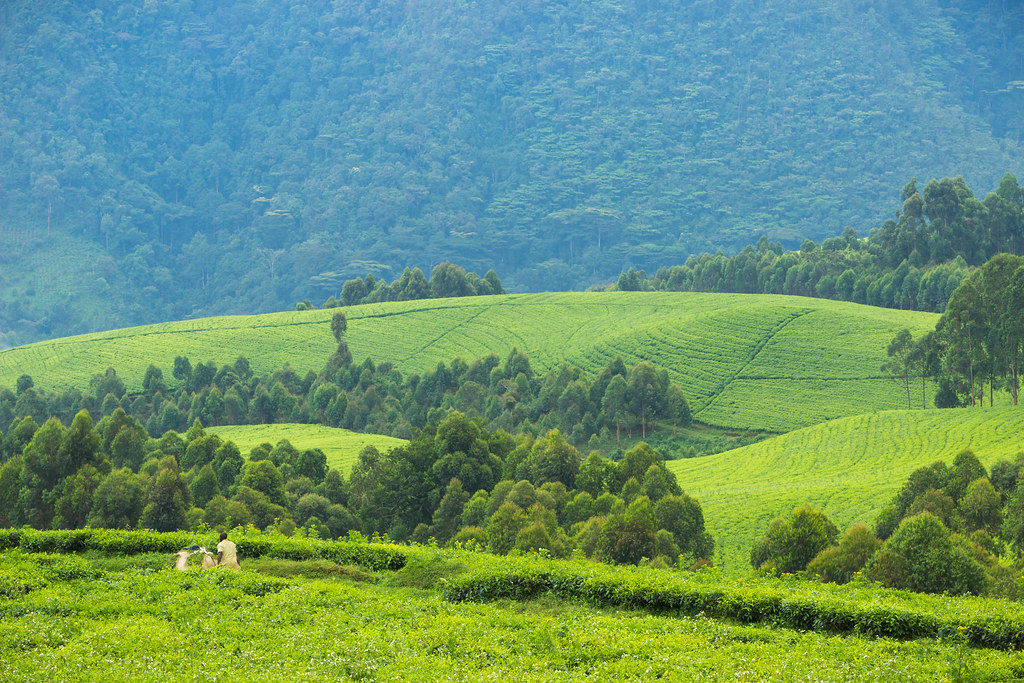
Nyungwe Forest National Park, located in southwestern Rwanda, is a biodiverse rainforest known for its rich wildlife and activities. The park is home to 13 primate species, including chimpanzees and colobus monkeys. Visitors can explore canopy walkways, guided hikes, and birdwatching opportunities, featuring over 300 bird species. Nyungwe Forest National Park is also a popular destination for those on Rwanda safaris, offering an immersive nature experience. While gorilla trekking in Rwanda is conducted in Volcanoes National Park, Nyungwe provides a unique alternative with its primate-focused activities, making it an integral part of Rwanda’s ecotourism.
What is Nyungwe Forest National Park and where is it located?
Nyungwe Forest National Park is a protected tropical rainforest located in the southwestern part of Rwanda, a country in East Africa. It sits within the Albertine Rift, which is part of the East African Rift system, and lies near the border of Burundi to the south and Lake Kivu and the Democratic Republic of the Congo to the west.
The park covers approximately 1,015 square kilometers and is known for its rich biodiversity, rugged landscapes, and ancient rainforests. It was officially established as a national park in 2004 with the goal of preserving its unique ecosystem and wildlife. Nyungwe is considered one of Africa’s oldest rainforests, estimated to be millions of years old.
The region is very important as a source of freshwater, with many rivers originating from the forest, including contributions to significant water systems like the Nile River Basin. Due to its location in a mountainous area, Nyungwe is also famous for its cooler climate compared to other regions in Rwanda. Its towering trees and lush canopy create an essential environment for numerous species of plants, animals, and birds.
What makes Nyungwe Forest National Park unique compared to other national parks?
Nyungwe Forest National Park stands out because of its incredible biodiversity and unique physical environment. It is home to an unparalleled variety of primates, with 13 species recorded, including the endangered chimpanzee and the charismatic Ruwenzori colobus monkey, known for its striking black and white fur. There aren’t many places in Africa where so many different primate species live in one park.
Another feature that makes Nyungwe unique is its canopy walkway. This suspended bridge, 70 meters (230 feet) above the forest floor, is a rare experience that allows visitors to walk through the treetops and observe life from the perspective of birds and monkeys.
Nyungwe also holds a distinct place as a forest that has existed for millions of years. This long history means it has an almost untouched, ancient ecosystem that supports a wide diversity of life. Among its trees and plants, many are endemic, meaning they are found only in Nyungwe or the surrounding Albertine Rift area.
Finally, its importance as a water catchment area sets it apart. The forest contributes to two major streams, one flowing toward the Nile and the other feeding the Congo River basin, making it one of the most critical spots for fresh water in this region of Africa.
What are the main attractions and landmarks within the park?
Several attractions make Nyungwe Forest National Park an exciting destination:
- Chimpanzee Tracking: This is one of the most sought-after activities in the park. Visitors can trek through the forest to find and observe wild chimpanzees in their natural environment. The chimps are playful, loud, and fascinating to watch.
- Canopy Walkway: The canopy walk is a standout feature within the park. This 160-meter-long (525-foot) suspension bridge is elevated high above the ground, offering panoramic views of the rainforest. It’s a unique way to experience the forest from above and to spot birds, monkeys, and the sweeping expanse of trees.
- Hiking Trails: The park has a network of well-maintained trails, including the Igishigishigi Trail, which is relatively short and leads to the canopy walkway, and the Bigugu Trail, which leads to Bigugu Peak, the highest point in the park. Each trail offers varying lengths and shows off Nyungwe’s diverse landscapes.
- Colobus Monkey Habitats: Apart from chimpanzees, visitors can participate in guided walks to find groups of highly social colobus monkeys, which are known to form groups of more than 300 individuals.
- Waterfalls: A popular spot is the Isumo Waterfall, a beautiful natural feature reached after hiking through dense forest and tea plantations. The cool spray and picturesque scene make it a favorite of trekkers.
- Birdwatching Opportunities: Nyungwe is a paradise for birding enthusiasts, with more than 300 bird species, including the colorful great blue turaco and a number of species that are unique to the Albertine Rift.
These attractions, combined with the chance to enjoy a peaceful and natural environment, make Nyungwe Forest a remarkable place for nature lovers.
What types of wildlife and plant species can be found in Nyungwe Forest?
Nyungwe Forest National Park is home to an incredible variety of wildlife and plant species, making it one of the most diverse ecosystems in Africa. The forest features over 1,000 plant species, including towering mahogany trees, ferns, and orchids. Some of the most notable plants include the giant lobelia and a wide range of flowering plants that sustain the park’s rich environment. The abundance of plant life supports many animals by providing shelter and food.
In terms of wildlife, primates are one of the park’s key highlights. Nyungwe is home to 13 species of primates, including chimpanzees, which are highly intelligent and known for their complex behavior. Visitors are often fascinated by the Ruwenzori colobus monkeys, a striking species with black and white fur that live in large groups (sometimes up to 400 individuals). Other primates include the L’Hoest’s monkey, blue monkeys, and golden monkeys, which can sometimes be seen moving through the tree canopies.
In addition to primates, the park is a haven for mammals, such as the golden cat, civets, and several antelopes like the black-fronted duiker. Reptiles, such as various snakes and lizards, are also present, though they are harder to spot.
Nyungwe Forest is especially famous for its bird species, with more than 300 bird species identified in the park. Bird watchers often come to see rare birds like the great blue turaco, a remarkable bird with bright blue and green feathers, as well as species like the red-collared mountain babbler and the Rwenzori batis.
If you’re lucky, you may encounter some of the 200 butterfly species that add a colorful touch to the forest. Overall, the park provides a unique habitat where plants and animals thrive in a protected environment.
What is the significance of Nyungwe Forest in terms of biodiversity?
Nyungwe Forest National Park is considered one of the most biodiverse regions in Africa for several reasons. This forest is not just a single habitat; it contains many different types of environments, including rainforests, swamps, and wetlands, making it suitable for a wide variety of species. Because it is situated in a mountainous region that receives a lot of rainfall, it gives rise to dense, lush vegetation and serves as a critical water catchment area for the surrounding regions.
The forest’s biodiversity is significant because it supports rare and endangered species, such as the chimpanzees and the Ruwenzori colobus monkeys, along with unique plant species that you won’t find in many other places. The park also acts as a sanctuary for over 300 bird species, including many that are endemic to this area, meaning they live only in Nyungwe or its immediate surroundings. Endemism in plants and birds highlights how valuable this habitat is for conservation, as losing it could mean the permanent loss of several species.
Nyungwe Forest is an important part of global biodiversity efforts because it is one of the few remaining tracts of montane rainforest that connect animal populations across East Africa. These connections allow for genetic diversity, which is crucial for the survival of species in the long term.
Since Nyungwe serves as a natural reservoir of medicinal plants, it benefits humans as well as wildlife. For example, local people have used forest plants in traditional medicine for generations. Additionally, its role in soil conservation and preventing erosion further confirms why it is not only ecologically but also economically significant.
By acting as a source of life for countless species and being an overall stabilizing force for ecosystems in its surrounding areas, Nyungwe Forest represents a vital resource in promoting both regional and global ecological health.
Are there any cultural or historical aspects associated with the park?
Beyond its natural beauty, Nyungwe Forest National Park has significant cultural and historical importance for Rwanda. The forest is deeply connected to the lives of local communities, especially through their traditions, beliefs, and practices. Local people, such as the Batwa people, have lived near these forests for many years, relying on its resources for survival. The Batwa are known to have been forest dwellers in ancient times, using sustainable methods to hunt, gather food, and build shelter.
There is also an intangible spiritual connection to the forest. In Rwandan culture, forests like Nyungwe have been viewed as sacred places believed to house spirits and offer protection to the land and people. Many traditional ceremonies are tied to the natural resources of the forest, reflecting a belief in the balance between humans and the environment.
For those interested in the local culture, there are educational programs and visits to nearby communities where visitors can learn about traditional crafts, storytelling, and medicinal practices derived from plants in Nyungwe. These activities allow people to not only appreciate the forest but also understand its role in the lives of the people who have lived alongside it for centuries.
Additionally, Rwanda’s history of conservation ties directly to Nyungwe. The forest is a shining example of the country’s effort to preserve its natural and cultural heritage while educating both locals and visitors about sustainable tourism.
What activities and experiences are available for visitors (e.g., hiking, canopy walks)?
Nyungwe Forest National Park offers a range of activities to help visitors explore one of Africa’s oldest rainforests. To start, hiking is a major activity here as the park has over 130 kilometers (about 80 miles) of well-marked trails. These trails vary in difficulty, so visitors of different fitness levels can participate. For example, the Igishigishigi Trail is a relatively easy and short path that leads to an exciting canopy walk. This canopy walkway is a suspension bridge hanging 50 meters (about 164 feet) above the forest floor, providing breathtaking views of the treetops and wildlife.
For those looking to spot primates, there are guided chimpanzee trekking experiences. Chimpanzee trekking usually begins early in the morning as this is when they are most active. Nyungwe is home to large groups of chimpanzees, and visitors might also come across other primates like black-and-white colobus monkeys.
Nature enthusiasts can join birdwatching tours. With over 300 bird species identified in the park, including rare ones like the Rwenzori turaco, it’s an exciting activity for bird lovers. Another unique offering in the park is a waterfall hike. The Isumo Waterfall Trail leads visitors through tea plantations, dense forest, and finally to the majestic Isumo waterfall.
The park also organizes cultural activities, such as visits to neighboring communities. These visits give insight into the local way of life and traditional practices. Whether walking through the rainforest, watching wildlife, or engaging with local culture, the experiences are diverse here.
How can one access Nyungwe Forest National Park, and what are the available accommodations?
Nyungwe Forest National Park is located in the southwestern part of Rwanda, about 225 kilometers (140 miles) from the capital, Kigali. The drive to the park from Kigali takes about 5 to 6 hours and offers scenic views of Rwanda’s rolling hills and green landscapes. Visitors can hire private vehicles, take guided tours, or use public transport for this journey. The closest town to the park’s main entrance is Gisakura, which is only a few kilometers away.
For those arriving by air, the nearest airport is Kamembe Airport in the city of Cyangugu. It’s approximately 32 kilometers (20 miles) from the park. Airlines like RwandAir operate domestic flights to Kamembe, making it convenient for those who prefer to fly instead of taking a long road trip.
Once at the park, a range of accommodation options caters to different budgets. For luxury seekers, One&Only Nyungwe House, located near the park, offers high-end lodging with wellness experiences and guided tours. Mid-range options include Nyungwe Top View Hill Hotel, which has cozy rooms and stunning panoramas of the forest and surrounding hills. Budget travelers can find simpler lodges and guesthouses in nearby towns like Gisakura. An example is the Gisakura Guest House, known for its affordability and proximity to the park.
Regardless of one’s budget, staying close to the park ensures easy access to daily activities like early morning treks and birdwatching.
What is the best time of year to visit the park for optimal weather and wildlife viewing?
Nyungwe Forest National Park is best visited during the dry seasons, which occur twice a year: from June to September and again from December to February. During these periods, the weather is more predictable with less rain, making forest trails safer and easier to navigate. The dry weather is especially ideal for activities like hiking, chimpanzee trekking, and canopy walks since the paths are not slippery.
Wildlife viewing is also excellent during the dry seasons. With less thick vegetation, animals are easier to spot as they roam or gather near water sources. For example, chimpanzees and monkeys are often seen searching for food during these months.
While the dry seasons offer the most comfort, the wet seasons (March to May and October to November) can appeal to those who don’t mind rainfall. During these months, the forest becomes lush and green, and photographers might appreciate the vibrant scenery. The wet seasons are also the best times for birdwatching since many bird species are nesting and more active in the mornings.
It’s important to note that temperatures in Nyungwe Forest remain relatively cool throughout the year due to its elevation, averaging around 15°C to 20°C (59°F to 68°F). Comfortable trekking clothes, sturdy shoes, and rainproof gear are recommended regardless of when you visit.
How does the park contribute to local conservation and sustainability efforts?
Nyungwe Forest National Park plays a big role in conserving nature and supporting efforts to protect the environment. The park is home to many unique animals, plants, and ecosystems, making it a priority for preservation. Efforts to protect the park include working to stop illegal logging, hunting, and farming inside its boundaries. These actions help preserve plant species and rare animals, such as monkeys and birds, that can only thrive in this habitat.
The park also promotes sustainability by encouraging eco-tourism. This is a type of tourism where visitors enjoy the forest responsibly, without causing harm to the environment. Revenue from visitors is used to maintain the park and support conservation projects. For example, funds might go toward protecting endangered species like chimpanzees or maintaining trails that cause minimal damage to the forest floor.
Another way the park supports sustainability is by working with local communities. Many nearby residents are now given opportunities to work as tour guides, rangers, or service providers for eco-friendly lodges. By including locals in conservation programs, the park helps reduce the need for people to rely on activities like poaching or deforestation to earn a living. Educational campaigns also teach people nearby why preserving the forest is important for everyone’s future.
In short, the park’s conservation efforts aim to protect its rich diversity and ensure that it continues to benefit not just wildlife but also future generations. These efforts are supported by a combination of strong rules, eco-tourism, education, and partnerships with local communities, making it a place where nature and people can coexist peacefully.
Is there any specific guidance or rules when exploring the park to ensure safety and preservation?
When visiting Nyungwe Forest National Park, there are some important guidelines in place to keep you safe and protect the environment. First, visitors are required to stay on marked trails. This helps to avoid damaging plants off the paths and keeps animals from getting disturbed. Walking on unmarked areas can also be unsafe, as there might be hidden hazards like slippery slopes or dense vegetation.
Another rule is to always travel with a professional guide. Guides know the forest well, which ensures you stay safe, learn more about the park, and avoid getting lost. For example, a guide might help you spot a group of chimpanzees without scaring them.
Visitors are also warned not to feed or touch wildlife. Feeding animals can make them dependent on humans or cause them to get sick from eating unsuitable food. Similarly, touching animals like monkeys can spread diseases between humans and wildlife. For safety, you are asked to maintain a proper distance from any animals you encounter.
Carrying trash bags is another strict rule, as littering harms the environment. Visitors must take all their waste with them when they leave. Noise levels should also be kept low to avoid disturbing the peace of the forest and its wildlife.
Finally, wearing appropriate clothing and footwear is important for both comfort and safety. Long sleeves and sturdy shoes protect against insect bites and slippery trails. By following these rules, visitors can enjoy the beauty of the forest while ensuring that it remains untouched for years to come.
How does Nyungwe Forest National Park impact the local economy and communities?
Nyungwe Forest National Park provides a significant boost to the local economy and the surrounding communities in several ways. Tourism in the park creates many jobs for local residents. People can work as tour guides, hotel staff, cooks, or drivers for visitors. For instance, eco-lodges near the park provide accommodation services, and these lodges often rely on employees from nearby villages. This provides stable and reliable income for many families.
The money generated by tourism also benefits the community indirectly. Part of the revenue from visitors’ park entry fees is often reinvested into community development projects, such as building schools, healthcare centers, or clean water systems. These initiatives contribute to improving standards of living.
The park also supports local businesses. For example, visitors stopping at the park often buy souvenirs, crafts, and goods made by local artisans. This type of trade helps small business owners earn a living while also preserving traditional crafts and skills.
By partnering with communities near the park, there are also programs that teach locals about conservation. These programs explain how a healthy forest benefits the community, such as by preventing soil erosion and preserving water sources. Sustainable farming practices and alternative income-generating activities, such as beekeeping or tree nurseries, are promoted as well.
Through tourism, jobs, and community-focused programs, Nyungwe Forest National Park provides economic opportunities while encouraging people to protect the forest. This balance ensures that both the park’s unique environment and the people who live nearby thrive together.
How To Book Your Safari in Rwanda
Nyungwe Forest National Park is a treasure trove of diverse wildlife, beautiful trails, and exciting adventures. This article explored key questions like what makes Nyungwe special, why it’s worth visiting, and how you can experience it firsthand. Ready to plan your trip? Connect with trusted Rwanda Safari Companies today to book an unforgettable visit. They’ll help craft the perfect experience to match your interests and ensure your Nyungwe adventure is one to cherish!
Chimpanzee Trekking in Rwanda
Chimpanzee trekking in Rwanda is a popular activity primarily in Nyungwe Forest National Park, known for its dense rainforest and rich biodiversity. Visitors can join guided treks to observe wild chimpanzees in their natural habitat, often hearing their lively calls before spotting them. This experience complements activities like gorilla trekking in Rwanda, particularly in Volcanoes National Park, making it a highlight of Rwanda safaris. Treks typically begin early in the morning and require moderate physical fitness due to the park’s hilly terrain. Besides chimpanzees, Nyungwe also hosts other primates, such as colobus monkeys, alongside various bird species, enriching the overall wildlife experience in Rwanda. Permits are required, and booking in advance is often recommended.
What is chimpanzee trekking, and where does it take place in Rwanda?
Chimpanzee trekking refers to walking through forests to find and watch groups of wild chimpanzees in their natural environment. It allows people to observe these animals up close, studying how they interact, communicate, and behave. Because they are among the closest relatives to humans, watching their behaviors often feels familiar and fascinating. Rwanda is a popular destination for this activity because of its well-protected forests and rich biodiversity.
In Rwanda, the main place where chimpanzee trekking happens is Nyungwe Forest National Park, which is located in the southwestern part of the country. This forest is a massive and ancient rainforest, home to many different species of animals and plants. Another place for this activity is Gishwati-Mukura National Park, although Nyungwe is the more famous destination for chimpanzee trekking. These areas have guides who help visitors track the chimps while explaining the forest’s ecology.
Through chimpanzee trekking in Rwanda, people can see how these intelligent animals live in their natural habitat without disturbing them. It also helps support conservation efforts by contributing money to protect the forests and animals.
What are the main locations for chimpanzee trekking in Rwanda?
Rwanda has two primary locations known for chimpanzee trekking: Nyungwe Forest National Park and Gishwati-Mukura National Park.
- Nyungwe Forest National Park: This is the most popular and widely known location for chimp trekking. The park is located in the southwestern region of Rwanda and covers over 1,000 square kilometers of rainforest. It is one of Africa’s largest mountain rainforests. Nyungwe is famous for its large habituated chimpanzee population, which allows visitors to trek with a reasonable chance of spotting these animals.
- Gishwati-Mukura National Park: This park is smaller and less visited compared to Nyungwe. Found near Lake Kivu, in the western part of Rwanda, this park includes two forest reserves, Gishwati and Mukura. Gishwati-Mukura is newer and still growing as a tourist destination. It offers chances to trek and observe chimps while also providing opportunities to see other wildlife such as golden monkeys and various bird species.
Both parks are within protected areas aimed at conserving biodiversity while allowing limited, guided human interactions with wildlife.
How do I prepare for a chimpanzee trekking experience in Rwanda?
Preparation for chimpanzee trekking involves both physical readiness and practical planning to ensure a fulfilling trip.
- Physical fitness: Trekking through forests like Nyungwe requires moderate physical fitness. You might walk for several hours on trails that can be steep, muddy, or uneven. Simple activities like walking regularly or light hiking in the weeks before the trip can help you prepare.
- Booking a permit in advance: Permits are needed for chimpanzee trekking. Since only a limited number of trekkers are allowed per day, securing your spot ahead of time is crucial. Permits can often be arranged through tour operators or directly through park management offices.
- Pick the right time of year: Chimpanzee trekking is available year-round, but it can be more physically challenging during the rainy season due to slippery trails. The dry season (June to September and December to February) tends to be more favorable.
- Clothing and gear: Wear light yet sturdy hiking boots for navigating the trails, long-sleeved shirts, long trousers, and insect repellent to protect against bugs. A small backpack with water, snacks, a raincoat, and essentials like sunscreen can also be helpful.
- Mental preparation: Chimpanzees are wild animals, so sightings are not guaranteed. Visitors should maintain realistic expectations and an attitude of patience, knowing that even just walking through the forest can be rewarding.
By getting ready physically and logistically, you’ll have a more comfortable and enjoyable chimpanzee trekking adventure.
What permits are required, and how much do they cost?
To go chimpanzee trekking in Rwanda, you need to have a trekking permit. This is a document that allows you to join an organized trek to visit the chimpanzees in their natural habitat. The permits are issued by the Rwanda Development Board (RDB), the government body responsible for tourism and wildlife protection.
The cost of a chimpanzee trekking permit in Rwanda is $90 per person per trek. This fee is significantly less than permits for gorilla trekking, making chimpanzee trekking an affordable option for many visitors.
These permits help fund conservation efforts, protect the chimpanzees, and support the staff who work in the parks.
Permits must be arranged in advance due to limited availability, as only a set number of visitors are allowed to join trekking groups each day to reduce impact on the chimpanzees and their habitat.
Permits can typically be obtained by contacting the RDB, working with a tour operator, or through travel agencies that specialize in Rwandan tours.
Example: If you’re interested in trekking in Nyungwe Forest National Park, you’ll need a permit specifically for that area. If there are logistical delays or you’re planning on visiting during a busy season, it’s always better to secure your permit a few weeks prior to your trip to avoid disappointment.
Remember that trekking without a permit is not allowed. Rangers check these permits to ensure conservation policies are upheld during the excursion.
What is the best time of year for chimpanzee trekking in Rwanda?
The best time for chimpanzee trekking in Rwanda is during the dry seasons, which are from June to September and December to February.
During these dry months, trails in the forest are less muddy, making it easier to move through the dense vegetation. Chimpanzees often stay at lower elevations or near trekking routes during this time, increasing the chances of finding them quickly.
However, trekking can also be done in the rainy seasons, which occur from March to May and October to November. While the trails can be slippery and harder to navigate during this period, rainy seasons offer some unique advantages. For example, food is more plentiful for the chimpanzees, which means they are less likely to move long distances and can be easier to locate.
For tourists who prefer drier, easier walks, choosing a dry season is ideal. For those who don’t mind challenging terrain and want a unique experience in lush, green surroundings, the rainy season can also be an option.
A tip: If you’re planning your trek to coincide with a specific chimpanzee group or location, confirm with your guide or accommodation provider which months are best for chimpanzee activity in that particular area.
Either way, regardless of the season, the Rwandan forests are stunning, and the opportunity to see chimpanzees makes the trek worthwhile.
How physically demanding is chimpanzee trekking, and what fitness level is required?
Chimpanzee trekking can be moderately to highly challenging, depending on factors like the distance needed to locate the chimpanzees and the terrain of the forest.
These treks typically take place in areas with dense vegetation, steep hills, and uneven trails. Nyungwe Forest National Park, a popular trekking site in Rwanda, is known for its hilly terrain, which requires participants to climb and descend slopes.
Treks can last anywhere from 2 to 6 hours, including the time it takes to locate the chimpanzees. Since the chimps are wild and constantly moving, trekking groups sometimes need to cover long distances to follow them.
In terms of fitness, having a moderate level of physical fitness is helpful. You don’t need to be an athlete, but a basic ability to walk for a few hours on trails and handle uphill/downhill paths is recommended. Visitors with mobility concerns or health conditions should discuss their participation with park staff, as alternative plans like shorter treks might be available.
Example: If you’re reasonably active, such as walking or jogging a few times a week, you should be fine. To prepare, consider doing hikes or walks with inclines before your trip.
Trekking may also require squeezing through thick vegetation or stepping over fallen logs. Rangers often stop for short breaks, so even if it feels tiring, you’ll get moments to rest and recover. Trekking poles (often provided by tour guides) and sturdy shoes are helpful to maintain balance.
In short, if you’re ready for an adventure and don’t mind a bit of physical effort, you’ll likely find the experience rewarding and worth the exertion.
What should I wear and pack for a chimpanzee trekking adventure?
When joining a chimpanzee trekking adventure, it’s important to wear and pack items that ensure comfort, protection, and practicality. Since treks often occur in dense forests and potentially muddy terrains, getting the right clothing and gear will make the experience enjoyable and safe.
- Clothing:
Opt for lightweight, long-sleeved shirts and long trousers. These help protect your skin from scratches from branches and thorny plants. They also reduce the chances of insect bites, particularly mosquitoes. Neutral, earthy colors like green and brown are recommended as they blend better with the natural environment and do not disturb the wildlife. - Footwear:
Wear sturdy, waterproof hiking boots with good grip. You might be trekking through slippery or uneven paths, so the boots will protect your feet and support your ankles. Consider pairing this with thick, cushioned socks for added comfort and to prevent blisters. - Outerwear:
A light rain jacket or poncho is advisable because tropical forests can experience unexpected rainfall. Many parks have humid conditions, so it’s best to be prepared for changing weather. - Accessories:
-
- Wide-brimmed hat or cap to shield yourself from the sun if parts of the trek take you through open areas.
- Sunglasses with UV protection to reduce glare.
- Gardening gloves or trekking gloves can protect your hands if you need to hold onto vegetation for support.
- Essentials to Pack:
-
- A small backpack to carry items comfortably. Make sure it’s waterproof or has a rain cover.
- Water bottle to stay hydrated, and consider packing a reusable one to reduce plastic waste.
- High-energy snacks, like granola bars, for the long trek.
- Sunscreen and insect repellent (preferably DEET-based to ward off insects).
- Binoculars to observe the chimpanzees and other wildlife from a distance.
- Camera or smartphone for capturing moments, but make sure to avoid flash photography.
- Basic first aid kit with band-aids, antiseptic wipes, and pain relievers.
- A small towel or handkerchief for wiping sweat off your face.
With this gear prepared, you’ll be ready for the trek and can focus on spotting the chimpanzees!
Are there any rules or guidelines to follow during a trek?
Chimpanzee trekking involves being in close proximity to wild animals, so there are strict rules and guidelines to ensure your safety and that of the chimpanzees themselves. Adhering to these rules protects both visitors and wildlife while enhancing the overall experience.
- Maintain a Safe Distance:
You should stay at least 8-10 meters (around 25-30 feet) away from the chimpanzees. This reduces the risk of transmitting diseases to the animals and helps avoid stressing them. While they are habituated to human presence, they remain wild and unpredictable. - Stay Quiet and Calm:
Avoid shouting, whispering, or making sudden movements. Use quiet voices when communicating with others during the trek. Loud noise can scare or irritate the chimpanzees, potentially putting both humans and animals at risk. - Do Not Touch or Feed the Chimpanzees:
No matter how close they come, resist any urge to touch or feed the animals. Feeding them could alter their natural feeding habits or introduce human food, which can make them sick. - Follow the Guide’s Instructions:
The guides are experienced and know how to handle different situations that might arise during the trek. Always listen to their advice, especially when encountering the chimpanzees. They can assess whether it’s safe to proceed or stay still. - Health Precautions:
If you are feeling unwell, particularly with a communicable illness (like a cold or flu), you are usually asked to stay away from chimpanzee trekking. This is because humans and chimps can easily pass diseases to one another. - No Littering:
Leave no trace behind. All trash should be carried out with you, including biodegradable items like food scraps. This ensures the forest remains clean and safe for wildlife. - Photography Rules:
Photography is usually allowed, but flash must be turned off because it can scare or agitate the chimps. Be respectful when taking pictures. - Stay in Groups:
Straying away from the group is not only dangerous due to the unfamiliar terrain but can also disrupt the trek or make it harder for guides to manage the group.
By following these rules, visitors foster a healthy interaction with nature, safeguarding the well-being of the chimpanzees while still enjoying their trek.
How long do chimpanzee trekking excursions typically last?
A chimpanzee trekking excursion usually ranges between 3 to 7 hours from start to finish, with some variability depending on factors like the location of the chimpanzees and the terrain being trekked. Here’s a breakdown of what to expect:
- Briefing and Preparation:
The trek begins with a briefing session by park rangers or guides. This typically lasts around 30 minutes to 1 hour. During this time, guides explain the rules, give an overview of the trek’s route, and provide insight into chimpanzee behavior. Visitors also use this opportunity to check their gear and prepare for the trail ahead. - Trekking to Locate the Chimpanzees:
The hike into the rainforest to find the chimpanzees can take between 1 to 4 hours, depending on how far the chimpanzees have moved from their last known location. Rangers track the animals based on prior sightings, vocalizations, and fresh signs like broken vegetation or dung. Terrain can be rugged, with steep inclines, muddy trails, and dense underbrush. - Time Spent with Chimpanzees:
Once the chimpanzees are located, visitors usually spend around 1 hour observing them. This time is strictly regulated to minimize disruption to the animals’ natural behavior. Visitors get to watch the chimps forage, groom, play, or rest. - Return Trek:
After the allotted one hour with the chimps, the group begins the journey back, which can take 1 to 2 hours depending on the distance covered.
Factors such as weather, the fitness level of the group, and how quickly the chimpanzees are located can influence the exact duration. Rangers make every effort to find the chimps, but because they are wild animals, there is no fixed guarantee regarding the hike’s duration. However, the adventure itself, from exploring the terrain to witnessing the chimpanzees in their habitat, makes it a worthwhile experience.
What are the chances of seeing chimpanzees in Rwanda during a trek?
The chances of seeing chimpanzees in Rwanda during a trek are quite high, but never guaranteed. The success rate typically ranges between 80% and 90%. Chimpanzees are wild animals, which means their movements are unpredictable. They roam freely through their habitats, covering large areas of forest. However, thanks to the expertise of local guides and trackers, as well as monitoring efforts, these chances remain favorable.
Rwanda is home to several chimpanzee populations, with one of the most popular groups being in Nyungwe Forest National Park. This park has more than 500 wild chimpanzees, making it one of the better places to look for them. Research teams monitor the behavior and location of these groups daily, improving the likelihood that trekking groups will encounter them.
Chimpanzees can be noisy and social, often communicating with loud calls or drumming on tree trunks. These sounds can help guides pinpoint their locations. However, there are times when the chimpanzees remain quiet or hidden, making them harder to locate. Weather conditions, food availability, and their mood can all affect their behavior on a given day.
For example, if it rains heavily, chimpanzees might stay high in the trees or move deeper into the forest. On sunny days, they could be easier to find as they search for food or socialize. Trekking groups should remain patient and flexible, as spotting these primates can sometimes take longer than expected.
Even if a group doesn’t get lucky, the forests of Rwanda still offer a unique environment full of other wildlife, such as monkeys, birds, and plants, making the experience rewarding regardless of an actual sighting.
What other wildlife or attractions can be experienced during a visit to Rwanda for trekking?
Rwanda is rich in biodiversity and additional attractions, making it a fantastic destination for nature lovers. While chimpanzee trekking is a highlight, there are numerous other opportunities to enjoy the country’s landscapes and wildlife.
One of the main attractions is mountain gorillas, found in Volcanoes National Park. This park is famous for its gorilla trekking experiences, where visitors can observe these gentle giants in their natural habitat. The park is home to several family groups of gorillas, and the experience is often described as deeply rewarding. Visitors must acquire a separate permit for this activity.
Another fascinating species in Rwanda’s forests is the golden monkey, known for its striking orange and black fur. Like chimpanzee and gorilla trekking, golden monkey trekking involves guided hikes to find and observe them in the wild.
In addition to primates, Rwanda’s Akagera National Park offers a classic safari experience. This park is home to the “Big Five” animals: lions, leopards, elephants, rhinos, and buffalos. Visitors can explore Akagera’s savannahs and lakes by vehicle or boat safaris.
For bird enthusiasts, Rwanda is a treasure trove with over 700 bird species recorded. Nyungwe Forest, in particular, is a prime birdwatching spot, with species like the great blue turaco and other brightly colored birds.
Beyond wildlife, Rwanda has stunning natural attractions such as Lake Kivu, one of Africa’s Great Lakes. Visitors can enjoy water activities like kayaking, boat rides, or simply relaxing by the lakeshore.
Rwanda also offers cultural experiences, such as visits to local communities or historical sites like the Kigali Genocide Memorial, which provides insight into the nation’s history and efforts toward reconciliation. For travelers interested in a broader experience, these cultural and wildlife options make Rwanda a remarkable destination.
Are there any cultural or ethical considerations to keep in mind when trekking with chimpanzees in Rwanda?
There are several cultural and ethical considerations to respect when trekking with chimpanzees in Rwanda. Following these guidelines ensures both the safety of the wildlife and the quality of the visitor experience.
First, maintaining a respectful distance from the chimpanzees is very important. While guides will lead the trek and control the viewing radius (usually 10 meters), visitors should avoid any action that might disturb the animals. These wild chimpanzees are protected, and unnecessary intrusion into their space can stress them or make them feel threatened.
Second, visitors should never feed the animals. Human food can harm wild chimpanzees’ health and alter their natural behaviors. Feeding them might also encourage them to approach humans when they should remain cautious of human interaction for their safety.
Cultural sensitivity plays a role during any visit to Rwanda. It’s essential to respect the local guides, trackers, and other tourism staff who lead the treks. Their dedicated work protects the chimpanzees and enables these treks. Engage with them respectfully and appreciate their knowledge.
Another ethical consideration involves following “Leave No Trace” principles in national parks. Visitors should avoid littering or leaving behind any waste. Even seemingly harmless items like food wrappers can disrupt the forest ecosystem.
On a broader level, supporting conservation efforts is key to ensuring that wildlife experiences in Rwanda continue sustainably. When purchasing permits or booking services, travelers should consider companies that work closely with local communities and support initiatives like reforestation or wildlife preservation.
Ethical tourism reminds visitors that they are guests in delicate ecosystems. The goal should always be to observe wild animals without interfering with their routines, leaving nothing behind but appreciation for the beauty of Rwanda and its vibrant natural heritage.
How To Book Your Safari in Rwanda
Chimpanzee trekking in Rwanda is an awe-inspiring activity that answers the ‘what,’ ‘how,’ and ‘why’ of exploring these incredible primates in their natural habitat. From understanding where to find them in Nyungwe Forest to learning what to expect during the trek, it’s easier than ever to start planning your adventure. Ready to experience this firsthand? Contact one of the trusted Rwanda Safari Companies today to book your unforgettable chimpanzee trekking expedition!